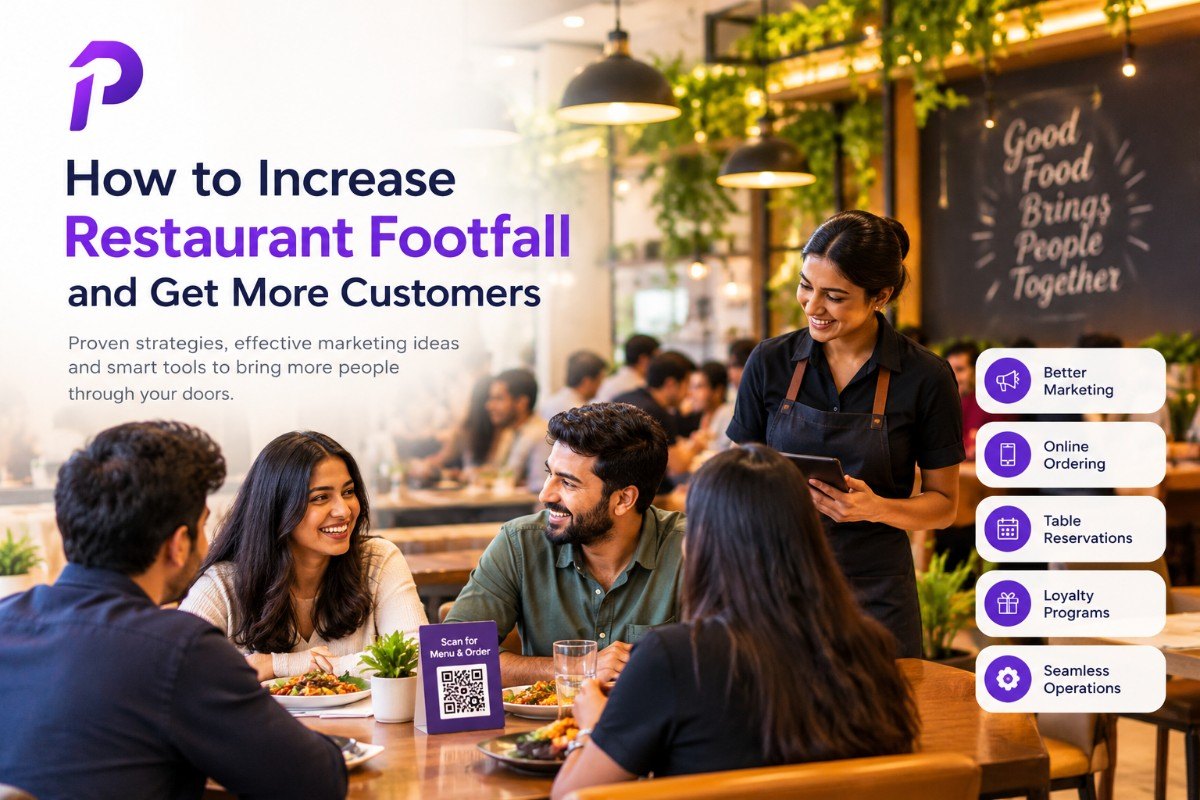
How QR Codes Help Restaurants Get More Orders & Repeat Customers
QR codes have become a simple but powerful tool for restaurants.
What started as a convenient way to display a digital menu can now become much more than that.
A well-designed QR code can help a restaurant:
- Display its digital menu
- Accept direct orders
- Promote special offers
- Encourage repeat purchases
- Build customer relationships
- Promote loyalty programs
- Reduce dependence on third-party platforms
- Connect offline customers with online ordering
For restaurants, the real opportunity isn't simply putting a QR code on a table.
It's using that QR code to create a direct connection between the restaurant and its customers.
What Is a Restaurant QR Code?
A restaurant QR code is a scannable code that customers can access using their smartphone camera.
Depending on how it is configured, the QR code can take customers to:
- A digital menu
- Online ordering
- Table ordering
- Reservation
- Restaurant website
- Loyalty program
- Special offers
- Feedback form
- Contact or WhatsApp
- Multiple restaurant services
Instead of asking customers to type a website address or download an app, they simply scan and go.
This makes QR codes particularly useful in restaurants where customers are already using their phones.
QR Codes Can Do Much More Than Display a Menu
Many restaurants use QR codes only for digital menus.
That's useful, but it is only the beginning.
Imagine a customer sitting at your restaurant.
They scan a QR code and see your menu.
After browsing the menu, they can:
View Menu → Select Items → Place Order → Pay → Receive Order
Now imagine the same customer receives a takeaway order.
You place another QR code on the packaging.
The customer scans it and sees:
"Order directly from us next time."
The same technology is now helping you generate your next order.
That's where QR codes become a marketing tool rather than just a menu tool.
1. Make Your Digital Menu Easily Accessible
One of the simplest uses of a QR code is your digital menu.
Instead of printing menus repeatedly whenever prices or items change, customers can scan the QR code and access the latest menu.
This can make menu management easier while giving customers a more convenient experience.
Restaurants can place menu QR codes on:
- Tables
- Counters
- Reception areas
- Waiting areas
- Outdoor seating
- Takeaway counters
2. Turn Your QR Menu Into an Ordering Channel
The next step is connecting your QR menu with ordering.
Instead of:
Scan → View Menu → Call Waiter
you can create:
Scan → View Menu → Add Items → Order → Pay
This can reduce friction for customers and make ordering more convenient.
For restaurants, it can also create opportunities to increase the average order value by displaying:
- Recommended items
- Combos
- Add-ons
- Desserts
- Beverages
- Special offers
For example, when a customer selects a burger, the ordering system could suggest:
"Add fries and a beverage for ₹99."
A simple recommendation can increase the value of an order.
3. Put QR Codes on Food Packaging
This is one of the most valuable uses of QR codes for restaurants.
Your food packaging already reaches your customers.
Why not use it to encourage their next order?
For example, you could print:
"Enjoyed your meal? Scan to order directly next time."
Place the QR code underneath.
When the customer scans it, they can reach your direct ordering channel.
This creates a simple customer journey:
Today's order → QR code → Next direct order
Over time, this can help restaurants convert one-time customers into repeat customers.
4. Reduce Dependence on Third-Party Platforms
Platforms such as Swiggy and Zomato can help restaurants acquire customers.
But restaurants may also want to develop their own direct customer base.
QR codes can help with this.
For example, a restaurant could place a QR code on takeaway packaging saying:
"Next time, order directly from our restaurant."
Customers can scan the code and place their next order through the restaurant's own ordering channel.
This doesn't mean restaurants have to stop using third-party platforms.
Instead, they can use them for customer discovery while building their own direct ordering channel for repeat business.
5. Use QR Codes to Promote Special Offers
QR codes can also be used to promote exclusive offers.
For example:
"Scan & Get ₹50 Off Your Next Order"
or:
"Scan to Unlock Today's Special Offer"
This gives customers a reason to interact with the QR code.
You can place these offers on:
- Bills
- Tables
- Packaging
- Flyers
- Posters
- Counter displays
- Receipts
The key is to give customers a clear reason to scan.
6. Encourage Repeat Customers With Loyalty Rewards
Restaurants spend a lot of effort getting customers through the door.
But getting a customer to return can be even more valuable.
QR codes can make loyalty programs easier to access.
For example:
Scan → Join Loyalty Program → Earn Rewards → Redeem on Future Orders
Instead of requiring customers to download a separate application, a QR code can provide a simple entry point.
Restaurants can reward customers for:
- Repeat orders
- Spending a certain amount
- Referrals
- Special occasions
- Trying selected items
The objective is simple:
Give customers a reason to come back.
7. Turn Your Bill Into a Marketing Opportunity
Most restaurant bills are treated as the end of a transaction.
But they can also be the beginning of the next one.
Add a QR code to the bill with a message such as:
"Order Again? Scan Here."
Or:
"Get our latest offers — Scan Now."
The customer has already completed a purchase.
They're therefore much more likely to be interested in returning than someone who has never visited your restaurant.
8. Connect Dine-In Customers With Future Online Orders
A customer who visits your restaurant today could become an online customer tomorrow.
You can use QR codes to make that transition easy.
For example, after a dine-in experience:
"Want to order from home next time? Scan here."
The customer scans the QR code and saves your direct ordering channel.
Now your relationship with that customer doesn't end when they leave the restaurant.
9. Use QR Codes on Social Media and Marketing Materials
QR codes don't have to stay inside your restaurant.
You can include them on:
- Posters
- Business cards
- Local advertisements
- Event banners
- Promotional flyers
- Social media graphics
- Packaging
- Promotional cards
For example, a restaurant running a local promotion could display:
"Scan to View Menu & Order"
This provides an immediate path from marketing to ordering.
10. Make Ordering Easier for Customers
Customers don't want complicated ordering processes.
They want:
Scan → Browse → Select → Order
QR codes can remove unnecessary steps.
This is particularly useful for customers who don't want to:
- Search Google for your restaurant
- Find your website
- Download an app
- Create a complicated account
- Search through multiple pages
A QR code can take them directly where you want them to go.
QR Codes Can Help Increase Average Order Value
QR codes themselves don't automatically increase sales.
What you do after the scan matters.
Your digital ordering experience can promote relevant items such as:
Add-ons
"Add cheese for ₹30"
Combos
"Make it a meal for ₹99"
Desserts
"Complete your meal with a dessert"
Beverages
"Add a cold drink"
Popular items
"Customers also order..."
These small recommendations can increase the value of individual orders.
QR Codes Can Help Build a Direct Customer Base
One of the biggest advantages of using QR codes strategically is that they can help restaurants build a direct digital relationship with customers.
Instead of every interaction happening through another platform, the restaurant can create its own journey:
Customer → QR Code → Restaurant → Order → Loyalty → Repeat Order
This gives restaurants more opportunities to engage customers directly, subject to applicable privacy and consent requirements.
Don't Put QR Codes Everywhere Without a Strategy
A QR code alone isn't a marketing strategy.
Simply printing a QR code and putting it on a table won't guarantee more orders.
You need to answer three questions:
1. Where should the QR code take the customer?
Menu? Ordering page? Loyalty program? Offer?
2. Why should the customer scan it?
Discount? Convenience? Rewards? Exclusive offer?
3. What happens after they scan?
Can they actually place an order, join loyalty or take advantage of the offer?
The experience after scanning is just as important as the QR code itself.
Best Places to Put Restaurant QR Codes
Here are some of the most useful locations:
| LocationBest Use | |
| Restaurant table | Digital menu / ordering |
| Takeaway packaging | Repeat direct orders |
| Food delivery packaging | Future direct orders |
| Bill | Offers / repeat orders |
| Counter | Menu / ordering |
| Waiting area | Menu / promotions |
| Business card | Online ordering |
| Flyers | Customer acquisition |
| Posters | Promotions |
| Receipts | Repeat orders |
The best placement depends on the customer's situation.
How OnePe Can Help
With OnePe, restaurants can use QR codes as part of a broader digital ordering and customer engagement strategy.
Instead of using a QR code only to show a menu, restaurants can connect customers with their digital restaurant experience.
For example:
QR Code
↓
Digital Menu
↓
Direct Ordering
↓
Online Payment
↓
Customer Engagement
↓
Loyalty & Repeat Orders
This turns a simple printed QR code into a potential customer acquisition and retention tool.
A Simple QR Code Strategy for Restaurants
If you're starting today, don't try to create dozens of QR codes.
Start with three.
QR Code #1 — Restaurant Table
Purpose: Digital menu + ordering
QR Code #2 — Food Packaging
Purpose: Encourage the next direct order
QR Code #3 — Bill/Receipt
Purpose: Repeat orders + offers + loyalty
Then measure the results.
Track:
- Number of scans
- Orders generated
- Repeat customers
- Direct orders
- Average order value
- Offer redemptions
- Loyalty registrations
This helps you understand which QR codes are actually generating business.
The Future of Restaurant QR Codes
QR codes are becoming more than a replacement for printed menus.
They can become a gateway to the restaurant's digital ecosystem.
A single scan can connect customers with:
Menu + Ordering + Payment + Loyalty + Offers + Customer Engagement
For restaurant owners, that means a small printed square can potentially create a much bigger business opportunity.
Final Thoughts
The real value of a restaurant QR code isn't the QR code itself.
It's what happens after the customer scans it.
A QR code that only displays a menu provides convenience.
A QR code that leads to ordering can generate revenue.
A QR code that encourages loyalty can generate repeat business.
And a QR code that connects customers directly with your restaurant can help you build a stronger, more independent customer relationship.
Don't just use QR codes to show your menu. Use them to bring customers back.
With OnePe, restaurants can turn QR codes into a bridge between offline customers, online ordering and long-term customer relationships.