All-You-Can-Eat Restaurant Management: How to Control Food Costs, Reduce Waste and Increase Profits
All-you-can-eat restaurants offer customers something they love: unlimited food at a fixed price.
For restaurant owners, however, the business model presents a very different challenge.
Your revenue per customer is often fixed, but your food cost is not.
One customer may eat a modest amount, while another may consume significantly more. Some guests may order more food than they can finish. During busy hours, kitchens can become overloaded with simultaneous orders, while staff struggle to keep track of tables, rounds and special requests.
That is why running a profitable all-you-can-eat restaurant requires more than an attractive menu and good food.
You need strong operational control.
From digital ordering and round management to kitchen coordination, inventory tracking, billing and customer service, technology can help you manage the entire operation more efficiently.
In this guide, we will explore how to manage an all-you-can-eat restaurant and how a modern restaurant management platform such as OnePe can help.
What Is an All-You-Can-Eat Restaurant?
An all-you-can-eat restaurant allows customers to pay a fixed price and consume food according to the rules of the restaurant.
There are several common formats:
- Buffet restaurants
- Unlimited sushi restaurants
- Unlimited BBQ restaurants
- Unlimited thali concepts
- Unlimited pizza or pasta restaurants
- Unlimited snacks and starters
- Fixed-price unlimited meal concepts
- Hotel restaurants offering buffet meals
Although the formats differ, they share one important characteristic:
The restaurant must control costs while maintaining a great customer experience.
If food costs, waste, ordering and table operations are not properly managed, unlimited dining can quickly reduce your profit margins.
Why All-You-Can-Eat Restaurants Are Difficult to Manage
Traditional restaurants generally charge customers based on what they order.
If a customer orders three dishes, the bill reflects those three dishes.
In an all-you-can-eat restaurant, the customer may pay a fixed amount regardless of how much they consume.
This creates several operational challenges.
1. Food Cost Can Vary
Your revenue per customer may remain fixed while food consumption changes significantly.
2. Food Waste Can Increase
Customers may order several items and leave some of them unfinished.
3. Kitchen Workloads Can Become Unpredictable
Large numbers of orders arriving simultaneously can create bottlenecks in the kitchen.
4. Staff Need Better Table Visibility
Servers need to know which table is on which round, what has already been served and what is still pending.
5. Table Turnover Becomes Important
If customers occupy tables significantly longer than expected, the restaurant may serve fewer customers during a meal period.
6. Billing Can Become Complicated
The restaurant may have different prices for adults, children, lunch, dinner, weekdays, weekends or special packages.
A well-designed operating system can help bring all of these processes together.
1. Use Round-Based Ordering
One of the most effective ways to control an all-you-can-eat operation is to introduce round-based ordering.
Instead of allowing customers to order an unlimited number of items simultaneously, restaurants can divide ordering into rounds.
For example:
Round 1 → Order → Kitchen Preparation → Serving → Round 2 → Order → Kitchen Preparation → Serving
The exact number of items and timing should depend on your restaurant concept.
For example, an unlimited sushi restaurant may use smaller and more frequent rounds, while an unlimited BBQ restaurant may require longer intervals.
Why Round Management Helps
A structured ordering process can:
- Reduce excessive initial ordering
- Make kitchen workload more predictable
- Improve table organization
- Make orders easier to track
- Reduce confusion between served and pending items
- Give customers a better understanding of the ordering process
The objective isn't to make customers feel restricted.
The objective is to pace consumption and production intelligently.
2. Use QR Ordering Instead of Taking Every Order Manually
In a traditional all-you-can-eat restaurant, a waiter may need to repeatedly visit every table to take orders.
During peak hours, this creates unnecessary workload.
A QR ordering system can change the process.
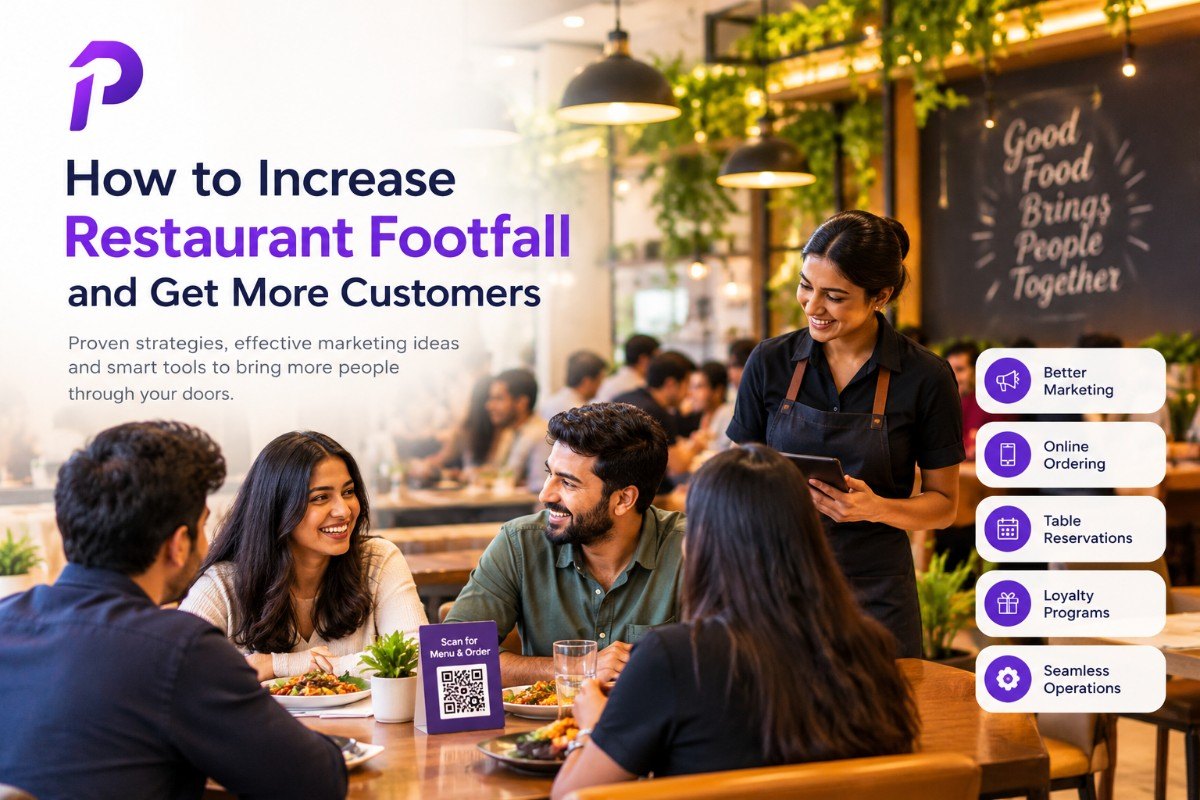
With OnePe's QR ordering system, customers can scan the QR code placed at their table, open the digital menu and place orders directly from their smartphones without downloading an app.
The basic process becomes:
Scan QR → Select Items → Place Order → Kitchen Receives Order → Prepare → Serve
This removes much of the repetitive order-taking work from your service team.
Your staff can instead focus on:
- Serving food
- Clearing tables
- Helping customers
- Handling special requests
- Maintaining cleanliness
- Upselling beverages and extras
3. Give Every Table Its Own Digital Identity
Table-level order tracking is particularly important for all-you-can-eat restaurants.
Your system should know:
- Which table placed the order
- Which items were ordered
- Which items are pending
- Which items were served
- Which round the table is currently on
- How many guests are sitting at the table
- What the customer has already ordered
OnePe's table management and QR ordering features allow restaurants to create dining areas and assign individual QR codes to tables. Orders can then be associated with the relevant table.
This gives managers a much clearer view of what is happening across the dining room.
4. Connect Ordering Directly to the Kitchen
One of the biggest problems with manual ordering is the gap between the customer, waiter and kitchen.
A typical process might look like:
Customer → Waiter → Handwritten Order → KOT → Kitchen → Chef
Every additional step creates an opportunity for delay or error.
With digital ordering, the process can become:
Customer → QR Order → POS → KOT/KDS → Kitchen
OnePe supports KOT and Kitchen Display System functionality so that incoming orders can be routed to the kitchen for preparation.
This is particularly useful during busy all-you-can-eat services when dozens of orders may arrive within a short period.
5. Use KDS to Control Kitchen Workload
A Kitchen Display System can help kitchen staff see incoming orders digitally instead of relying entirely on paper tickets.
For an all-you-can-eat restaurant, the kitchen can monitor:
- New orders
- Items being prepared
- Items ready for serving
- Pending items
- Order priority
- Table numbers
- Different kitchen sections
For restaurants with multiple preparation areas, separating orders by kitchen or station can make operations even easier.
For example:
Grill → Sushi → Main Kitchen → Dessert → Beverage
The objective is simple:
Get the right food to the right table at the right time.
6. Control Food Waste
Food waste is one of the biggest threats to profitability in an unlimited dining model.
There are several ways restaurants can reduce it.
Track What Customers Order
Digital ordering gives you a record of which dishes are being ordered.
Over time, you can identify:
- Frequently ordered dishes
- Rarely ordered dishes
- Items frequently reordered
- Items that may be overproduced
- High-cost items
- Slow-moving ingredients
Serve Appropriate Portions
Unlimited does not necessarily mean customers need a large portion of every item.
Smaller portions can allow customers to try more dishes while reducing the amount of food left unfinished.
Monitor Waste
Your restaurant should record waste wherever possible.
For example:
Ingredient purchased → Food prepared → Food served → Food wasted
The difference can provide valuable information about operational efficiency.
OnePe also includes inventory and stock-management functionality designed to help restaurants monitor stock levels and reduce wastage.
7. Connect Your POS With Inventory
Your POS should not operate as an isolated billing system.
For an all-you-can-eat restaurant, your ordering, billing and inventory data should work together.
For example:
Order → Sale → Ingredient Consumption → Inventory Update → Report
If a particular dish becomes extremely popular, the restaurant should be able to identify the impact on ingredient consumption.
This helps managers make better purchasing and preparation decisions.
A modern restaurant management system can bring POS, inventory, orders and reporting together instead of forcing managers to maintain multiple disconnected systems.
8. Design Your Unlimited Menu Carefully
Not every item has the same food cost.
Consider a simplified example:
| CategoryExampleRelative Cost | ||
| Low Cost | Rice, Dal, Vegetables | Low |
| Medium Cost | Chicken, Paneer, Basic Starters | Medium |
| High Cost | Seafood, Premium Meat | High |
| Premium Add-ons | Specialty Items | Very High |
This doesn't mean you should hide expensive items.
Instead, understand the economics of your menu.
Your objective is to create a menu that provides customers with variety and perceived value while maintaining a sustainable food cost.
9. Use Digital Menus to Promote High-Value Items
A digital menu gives restaurants more flexibility than a static printed menu.
You can:
- Add photographs
- Highlight popular dishes
- Create categories
- Mark chef specials
- Hide unavailable items
- Change prices
- Add descriptions
- Promote beverages
- Promote desserts
- Promote premium upgrades
OnePe allows restaurants to manage digital menu items and update availability from the dashboard.
This becomes particularly useful when ingredients or dishes change during a busy service.
10. Increase Revenue Beyond the Unlimited Package
An all-you-can-eat package does not mean every item in your restaurant has to be included.
In fact, beverages, desserts, premium upgrades and other extras can create additional revenue opportunities.
For example:
Unlimited Meal ₹799
Then offer:
- Premium beverage
- Mocktail
- Dessert upgrade
- Premium seafood
- Specialty coffee
- Premium cocktail/mocktail
- Additional paid add-ons
Your digital menu can make these options visible at the right stage of the customer's ordering journey.
The important thing is to make upselling useful rather than intrusive.
11. Make Waiter Calling Digital
Even when customers place orders themselves, they will still need assistance.
They may need:
- Water
- Additional plates
- Napkins
- Assistance with an order
- The bill
- A waiter
Instead of repeatedly calling across the restaurant, customers can use a digital waiter-call feature.
OnePe includes waiter calling so customers can request assistance directly from their table.
This helps staff respond to requests while giving managers better visibility into service activity.
12. Manage Different Pricing Rules
All-you-can-eat restaurants frequently have different pricing structures.
For example:
Lunch
₹599 per adult
Dinner
₹799 per adult
Weekend
₹899 per adult
Children
₹399
You may also have different packages for:
- Weekdays
- Weekends
- Festivals
- Special events
- Lunch
- Dinner
- Corporate groups
Your billing system should make these pricing structures easy to manage.
The goal is to avoid manually calculating every customer's bill.
13. Track the Right Restaurant Metrics
Managing an all-you-can-eat restaurant requires more than looking at total sales.
You should monitor key operational metrics.
Food Cost Per Guest
How much food cost is associated with each customer?
Average Revenue Per Guest
How much revenue does each customer generate?
Average Items Per Guest
How many items does each customer order?
Waste
How much food is being wasted?
Table Turnover Time
How long does each table remain occupied?
Revenue Per Table
How much revenue does each table generate?
Beverage and Add-On Sales
How much additional revenue is generated outside the basic unlimited package?
Popular Items
Which dishes are ordered most frequently?
These numbers can help you identify where your restaurant is making money and where it is losing money.
OnePe provides restaurant reporting and analytics capabilities alongside POS, orders, inventory and other operational modules.
14. Train Your Staff Around the System
Technology alone will not solve operational problems.
Your staff needs to understand the workflow.
For example:
Customer scans QR
↓
Customer places order
↓
Order reaches POS/Kitchen
↓
Kitchen prepares food
↓
Staff serves table
↓
Customer requests next round
↓
Additional order reaches kitchen
↓
Final bill generated
Every employee should know their role in this process.
Proper training prevents staff from creating parallel manual processes that defeat the purpose of the technology.
15. Choose an All-in-One Restaurant Management Platform
An all-you-can-eat restaurant can use separate systems for:
- QR menu
- Ordering
- POS
- KOT
- KDS
- Inventory
- Billing
- Staff
- Customer management
- Reporting
But managing multiple disconnected systems can create unnecessary complexity.
An integrated platform brings these functions together.
OnePe is designed as an all-in-one restaurant management platform, combining QR menus, ordering, POS, KOT/KDS, table management, waiter calling, inventory, billing, staff management, reporting and other restaurant functions in one system.
That means your restaurant can move toward a connected workflow:
Customer
↓
QR Menu / Ordering
↓
POS
↓
KOT / KDS
↓
Kitchen
↓
Table Service
↓
Billing & Payment
↓
Reports & Inventory
Instead of managing each process separately, restaurant owners can manage the operation from a single platform.
All-You-Can-Eat Restaurant Management Checklist
Before launching or improving your unlimited dining concept, make sure you have a system for:
- Digital menu management
- Table management
- QR ordering
- Round-based ordering, where appropriate
- Order tracking
- KOT
- Kitchen Display System
- Inventory management
- Food cost monitoring
- Waste tracking
- Staff management
- Waiter calling
- Table status tracking
- Customer management
- Billing
- Payment processing
- Sales reporting
- Menu performance analysis
- Beverage and add-on upselling
The more of these processes you can connect, the easier it becomes to manage a busy restaurant.
Final Thoughts
Running an all-you-can-eat restaurant is not simply about offering unlimited food.
It is about finding the right balance between customer satisfaction, food cost, kitchen capacity, table turnover and profitability.
The restaurants that manage this model successfully are not necessarily the ones that serve the most food.
They are the ones that manage every part of the operation efficiently.
Digital ordering can reduce unnecessary order-taking work. QR menus can make ordering faster. KOT and KDS can improve communication with the kitchen. Inventory management can help control stock and waste. POS and reporting can give owners better visibility into the economics of the business.
And when all of these systems work together, restaurant owners can spend less time managing disconnected processes and more time improving the customer experience.
OnePe brings these restaurant operations together in one platform — from QR ordering and POS to KOT, KDS, inventory, billing, waiter calling and reporting.
If you're running an all-you-can-eat restaurant, buffet, QSR, café, food court or full-service restaurant, the right technology can help you build a faster, more controlled and more profitable operation.
Run your restaurant smarter with OnePe.
Try OnePe and bring your restaurant's ordering, kitchen and management operations together in one place.